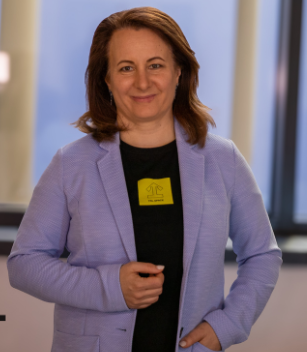
Not everyone needs to have a degree in aerospace engineering to help our missions send satellites into space and reach the Moon in the foreseeable future. Michaela Bartoníková, who heads HR at TRL Space, explains in an interview why working at this company is “sexy” even for people from the automotive industry, for example; why engineers don’t get lost in the crowd here; and what it’s like when your calculations turn into physical hardware heading for orbit in just a few months.
How does TRL Space differ from the large tech corporations that have set their sights on Brno and its immediate surroundings? Why should an engineer choose to work here?
I see two main differences. In corporations, an engineer often has a very narrow scope of work. Hundreds of people work on a project, and usually everyone handles just one small part. Here, the team is smaller, and you’re fully immersed in the project from start to finish—from the initial design through physical assembly or the moment the product launches into space. Everyone can have a huge impact on what the final result looks like.
The second factor is flexibility. Given our size, we can make decisions quickly, whether it’s about policy adjustments or purchasing new software. In large companies, you can wait weeks or even months for such things.
We don’t have lengthy processes that would slow you down.
What about a comparison with small space startups?
Our vision is to be the integrator of the entire mission. While many smaller companies focus on just a specific segment or component, we want to oversee the project as a whole—from design to launch. We may even hire other smaller companies to handle specific parts.
Another thing is the “flight phase.” Many engineers, even abroad, only get as far as the initial feasibility studies. They design, test whether it could work, but few ever see their product actually launch into orbit. We’ve already launched one satellite, and the people here are working on things that will actually fly. That’s a huge draw for engineers.
Does a candidate need to have prior experience in the space industry?
Not at all. For 90 % of engineering positions, we don’t require candidates to have “space” experience. We’re looking for people with 5 to 10 years of experience, even from the automotive industry or other technical fields where hardware is developed. Only for the remaining 10 % of positions, where that expertise is essential, do we usually have to look abroad – to Italy, Germany, or Spain – because we don’t have those specialists in the Czech Republic yet.
How would you describe the corporate culture at TRL Space? Is it a “garage” startup, or is it already a structured company?
We’ve been around for four years, but we haven’t been a startup for a long time. After all, our products and satellites have been flying in space for years. In the space sector, you can’t afford chaos. We need to have very well-defined processes and rules for how things are done. But within those boundaries, there’s plenty of room for creativity – if you’re designing a box for electronics, it’s up to you to figure out how to make it work.
Our culture is very relationship-based and team-oriented. That’s not a cliché; for us, it’s a necessity. If a designer or software engineer “slacks off,” they can ruin three years of work for the entire team. We have to help and listen to each other because those roles are closely interlinked.
What does a typical workday look like? Do you insist that everyone be in the office?
We place much greater emphasis on results than on how many hours you spend at your desk. We want people to meet up, but for most positions, being in the office just three days a week is enough. We strive for flexibility so that people can balance their personal lives with work, but at the same time, we want to maintain that team spirit, so we don’t prefer a fully remote setup with no contact with the team.
What kinds of events help build team spirit?
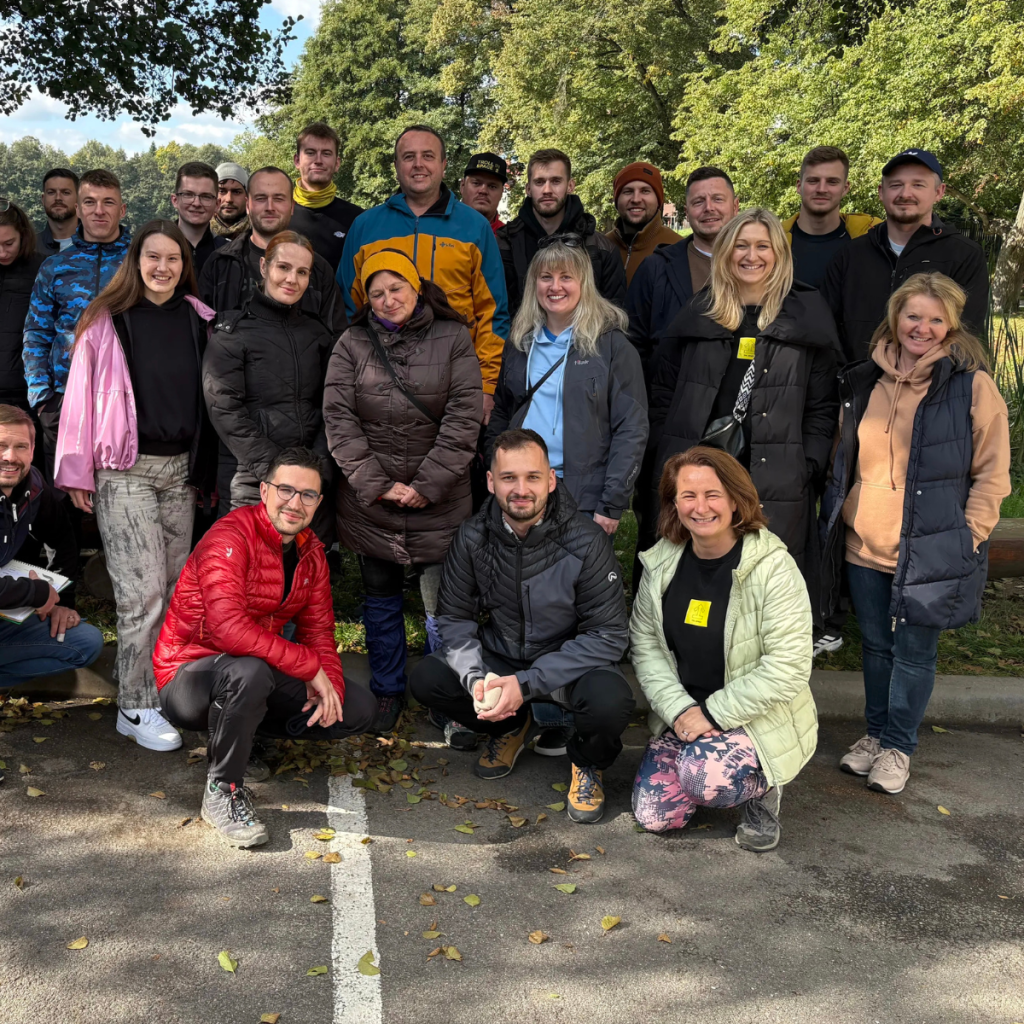
We have the classics like a Christmas party, team-building, or a summer barbecue on the terrace. Every quarter, we hold company-wide meetings where everyone gets together to discuss the company’s direction. Individual teams also have their own “beer budget”. They can go out for dinner, go-karting, or bowling. Department heads play an important role at our company, which is why we focus on developing their leadership skills, joint workshops, and off-site work meetings. It’s important to us that the management team isn’t just a group of individuals, but a real team that pulls together and helps maintain a common direction across the company.
The space industry is traditionally perceived as a male-dominated field. What is the situation for women at TRL Space?
We’d love to debunk the cliché, but the truth is that the engineering world is still primarily a male-dominated field. That said, I’m proud that we have two female project managers. While these are semi-technical roles, they oversee key projects. We also have women in finance and marketing. If we could “snag” more female engineers, I’d be very happy, but so far they still make up only a small fraction of the male applicants.
Brno is often called the “space heart” of the Czech Republic or the region. Isn’t that an exaggerated comparison? Do you feel that way too?
Within the country, definitely. Brno has a unique ecosystem thanks to the universities and companies that are really driving it forward. When it comes to comparing it to Europe, we have to be realistic – countries like Germany, Italy, or Poland have a much longer history and stronger academic programs. We started later, and not as much money goes into the field here. But that’s exactly why it’s such an opportunity. We’re building something new, and for people in the Czech Republic, it’s a chance to be part of something with a huge future for decades to come.
What do you personally enjoy most about your work at TRL Space?
I enjoy the vision and the journey ahead of us. I know that even in five years, I’ll still have interesting opportunities for growth here because the company’s plans are ambitious. At the same time, I appreciate the mindset of our people—the desire to create, find their own solutions, and not let themselves be constrained by the idea that something “is a given.” Everyone here can bring their own ideas to the job and see a concrete impact they’ve made. And in that sense, working in HR is very similar to the work our engineers do on projects.