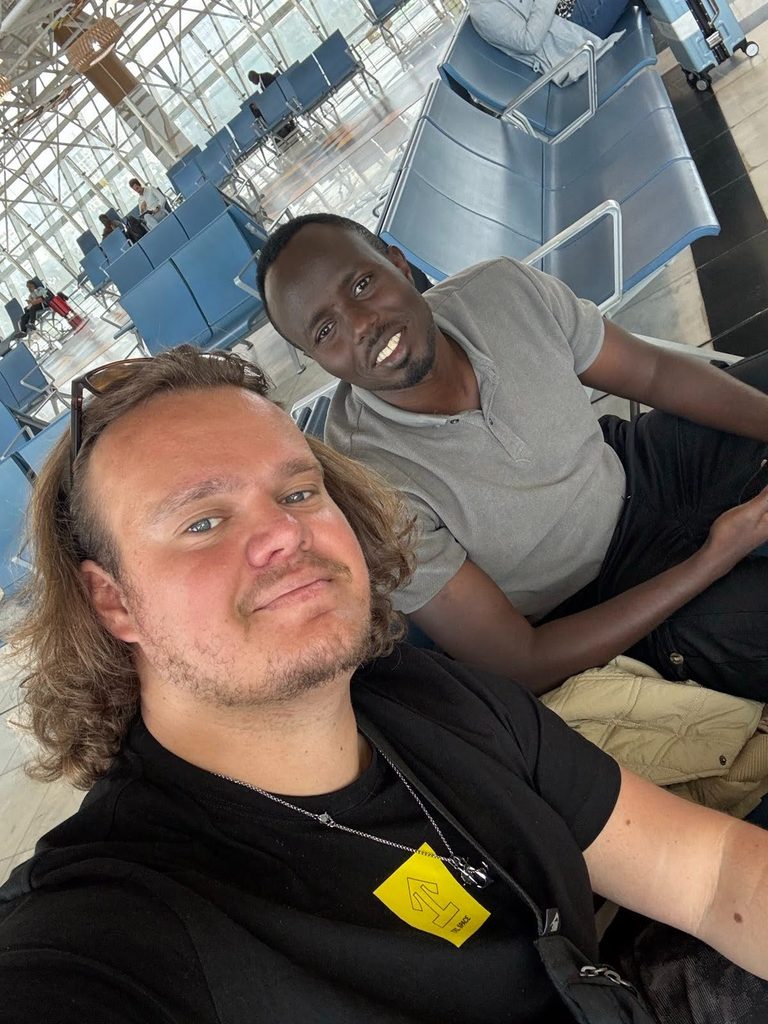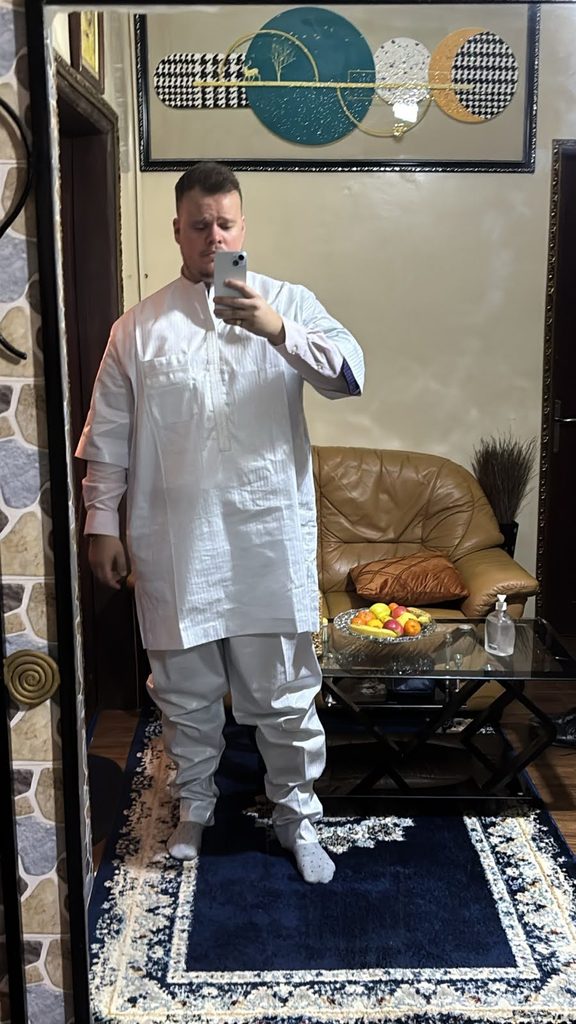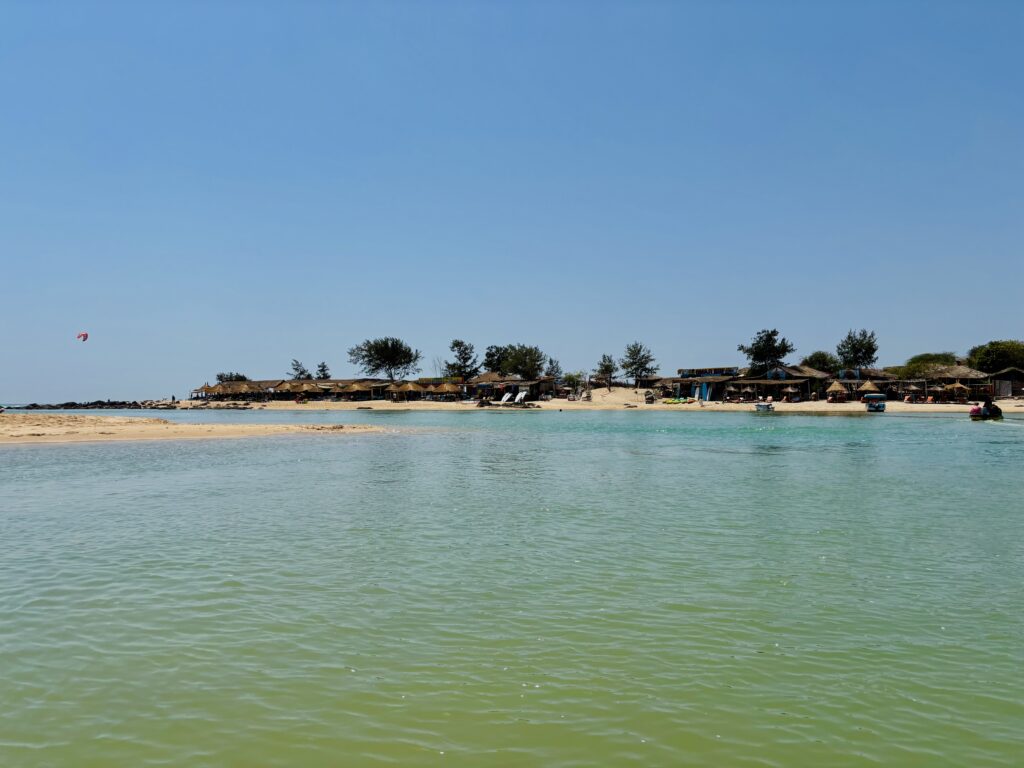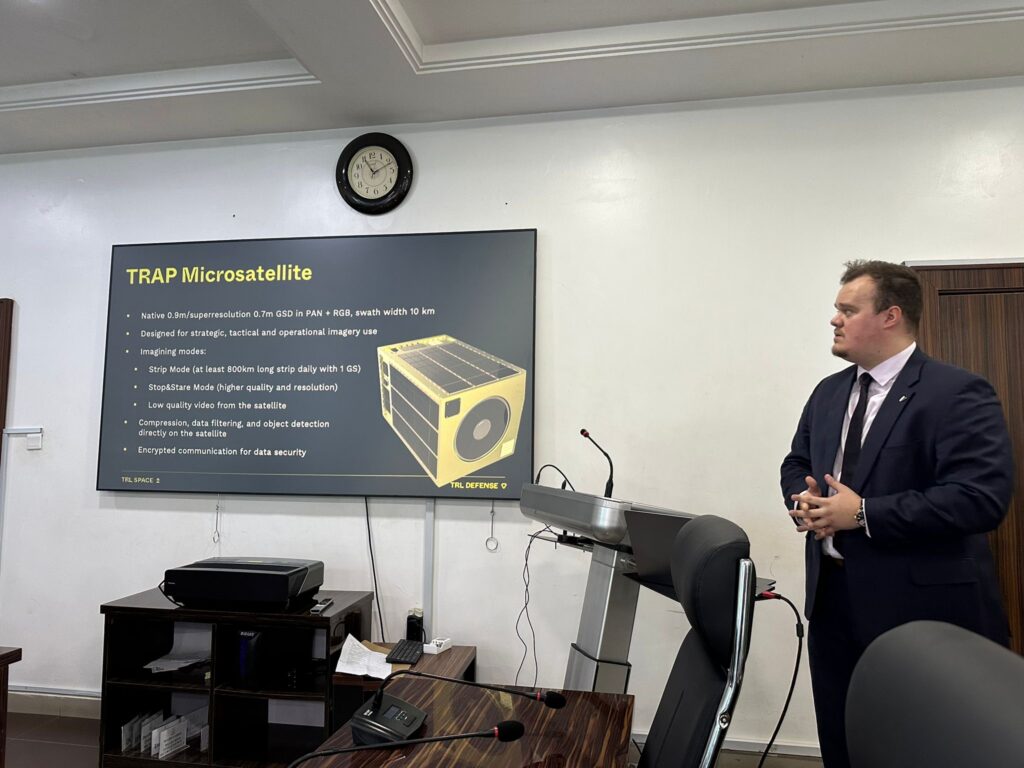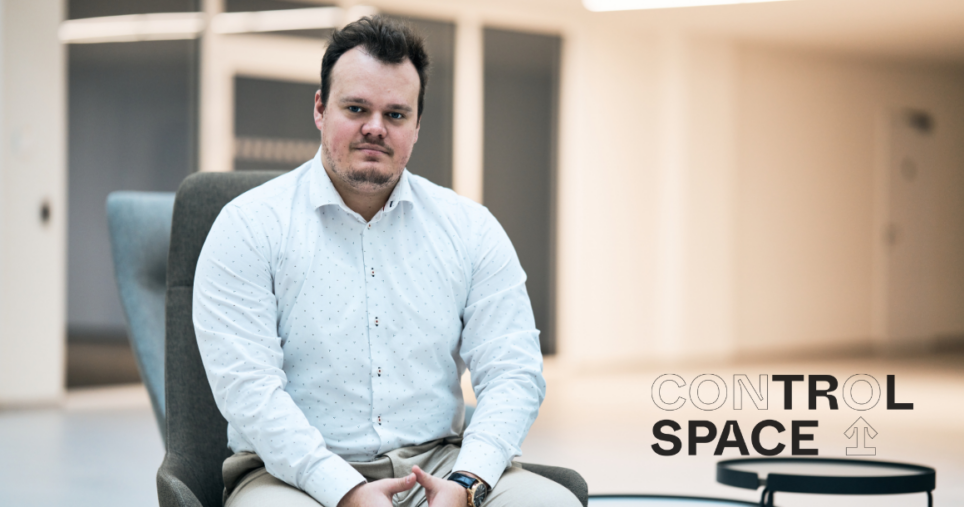
Employees’ journeys to TRL SPACE often involve interesting twists and turns. The same goes for Jakub Janík. The young man, who speaks eight foreign languages, came very close to pursuing a career as a musician. In the end, however, he opted to study law. “I told myself I’d rather be a lawyer who plays accordion on the street in his free time than just an accordion player,” he says with a smile today. Nowadays, he spends a significant portion of the year in Africa, managing TRL SPACE projects in Rwanda, Gabon, Senegal, and other African nations.
When people hear “international development in the space industry,” they usually think of the US, Europe, or Asia. Yet at TRL SPACE, you oversee operations in Africa—first Rwanda, now Gabon and Senegal. What makes this continent so interesting, and where does its greatest potential lie?
If you look at it from a global perspective, Africa was overlooked for a long time in many ways. The main wave of independence swept through the continent between the 1950s and 1970s, and progress across different countries has moved at varying speeds ever since. Today, capacities in Asia and the Americas are largely maxed out, and the world is realizing what it has been ignoring. Major global powers like China, Russia, and Turkey are making massive moves there – whether in the civil, defense, energy, or other sectors. As a private company, we decided to step up too. Four years ago, we entered Rwanda, an economic tiger often dubbed the Switzerland of Africa. It served as a testing ground where we put everything into practics. Today, Rwanda is our flagship operation.
What does your presence in Rwanda look like in practice?
We have our own local branch, a technical team, and middle management there. We aren’t a company that shows up, sells, finishes a project, and disappears. Our goal is to build deeper relationships and meaningfully develop activities with local impact and local potential. We focus heavily on sourcing and nurturing local talent – whether in satellite technology or related fields like computer science, mathematics, physics, or cybersecurity. At the same time, we are extremely careful not to come across as “just another white face” telling them how to do their jobs. We aim for equal partnerships and run projects primarily through local developers and engineers.
A widely cited recent book points out that “Africa is not a country,” highlighting how people elsewhere tend to lump this massive continent into one category. In reality, Africa is far from homogenous and extraordinarily diverse. How does working across different regions vary?
People often tend to lump Africa into one bucket, which is a mistake. Senegal in the west, Gabon in central Africa, or Rwanda in the east are entirely different worlds with distinct cultures and infrastructures. Rwanda’s story alone is extraordinary. Suffering from an unimaginable genocide in the 1990s, it rose from the ashes like a mythical Phoenix and today serves as a role model for technological development. When potential clients in a new country ask us for references, we point to our track record in Rwanda. It works brilliantly. Prospective clients see that we are a proven, stable partner with authentic African experience.
Czechia and Rwanda are over 8,000 kilometers apart. How do you build trust and manage a team across such a distance?
It comes down to personal relationships. The African approach to collaboration relies heavily on getting to know you informally first. They need to know who they are sitting at the table with, feel things out, and build a more familiar rapport. Only then comes the formal, business side of things. When high-level negotiations take place in Rwanda, we support the local team with the presence of top management from Czechia.
In the context of the African space sector, terms like NewSpace or Space in Africa are frequently used. What do they actually mean?
The core idea of NewSpace is that space no longer belongs exclusively to giant state agencies and massive corporations. Today, a small company can emerge that doesn’t build an entire satellite, but perfects one specific component – like a specialized alloy bolt, thrusters for orbital maneuvering, or data interpretation. Meanwhile, Space in Africa is built on the reality that talent can be found anywhere in the world. In the past, African engineers studied in India, Japan, or China and returned home. Today, a new generation is rising, national space agencies are being established, and local startups are popping up. These local teams are best equipped to process the data because they understand the environment, agriculture, and mindset better than any European ever could.
What lies ahead for you in the second half of the year?
We have three main priorities underway: advancing our branch in Rwanda, completing projects in Senegal, and actively collaborating with the government in Gabon. But the magic of Africa is that no matter what you plan, reality will be different. I always jokingly say that if Africans were ever awarded a Nobel Prize in Physics, it would be for their absolute mastery of the theory of time relativity.
Does time flow differently there?
Their perception of time is completely different. For them, the present moment and the overall atmosphere are what matter most. Event invitations go out with staggered arrival times so people gather gradually. Nothing starts until the room is set to the right frequency—or, as the phrase goes, until the good vibes are there. They won’t start a meeting just because the clock strikes ten. It requires tremendous patience, but once you learn to work with this mindset, it opens up incredible possibilities.
How did you personally get into this line of work? What path leads from law to space technology?
By education, I’m a lawyer, specializing in international trade law. Originally, I aimed for the Janáček Academy of Music and Performing Arts (JAMU) to study composition, but I eventually decided it would be more pragmatic to be a doctor of law who plays the accordion than anything else. Languages always came naturally to me, I speak about eight, and I’ve always been drawn to international environments. After graduating, I spent a brief time practicing law, but it wasn’t for me. From there, I moved to the Brno City Municipality, where I handled protocol and international relations at the Foreign Relations Department. It was a great learning experience, but after a while, I felt the need for a change and a breath of fresh air outside the public sector. I reached out to my network, and through a few consulting gigs, I came across TRL SPACE.
Does your background in municipal protocol help in the African business environment?
Absolutely. Both diplomacy and doing business in Africa depend on the ability to read your counterpart and respect local customs. In Brno, I worked on foreign trips and hosted visiting delegations, which gave me solid groundwork for top-level negotiations. While things in Africa are more informal and heavily focused on personal connections and atmosphere, when it comes down to negotiating with ministries or state institutions, knowing official protocol and international relations is genuinely useful.